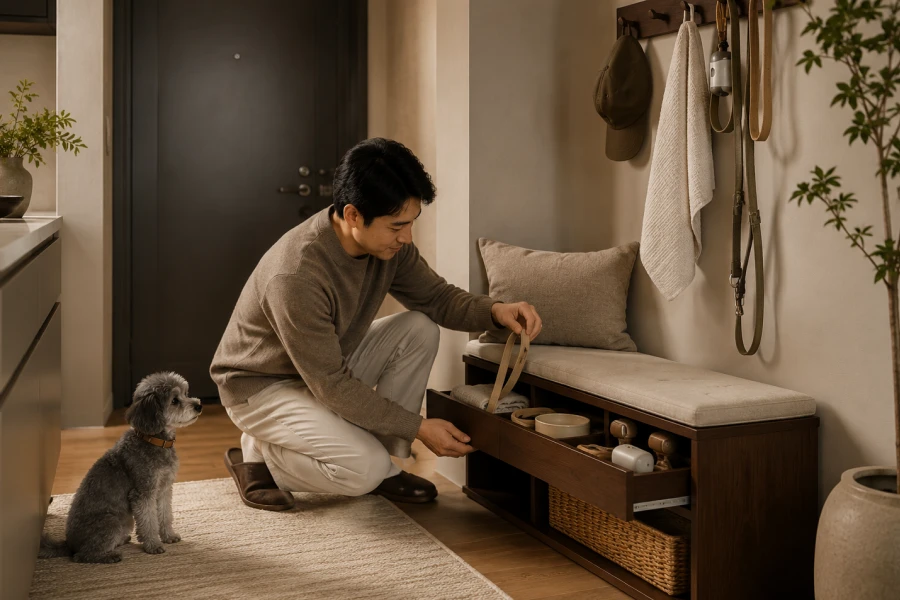
Pet supply organization can change the tone of a rushed household almost immediately. Bowls, leashes, toys, and grooming tools often spread because they lack designated homes. A clear system removes small frustrations before they become daily clutter. It also helps every family member find essentials without asking where they went. Begin by noticing what your pet uses most often each day. Those items deserve the easiest access and the most visible placement. Less-used extras can move higher, lower, or behind closed doors. The goal is not a showroom-perfect room with nothing in sight. Instead, it is a home that supports care without adding another chore. Pet supply organization works best when it reflects real habits rather than imaginary routines.
Evenings become easier when the feeding scoop and favorite leash appear instantly. A designated pet supply storage area limits frantic searches before walks, meals, or bedtime. Start with a basket, shelf, or cabinet near the action. Keep only the essentials there, then remove duplicates that create visual noise. A small tray can hold medication, treats, and refill reminders together. Nearby hooks make collars and harnesses simpler to grab. This arrangement also prevents wet or dirty gear from landing on furniture. Guests notice a calmer entrance instead of scattered animal accessories. Your pet benefits because care becomes more consistent during hectic moments. Most importantly, the system saves attention for companionship rather than cleanup.
Strong pet supply organization follows the rhythm of feeding, walking, play, and rest. Think through each moment before choosing bins or labels. Morning routines may need breakfast supplies near the kitchen. Afternoon walks may need a compact pet care station beside the door. Evening play can happen more smoothly when toys live nearby. This approach avoids a single overloaded cupboard filled with unrelated items. It also helps children participate in simple pet responsibilities. Place frequently used products at hand height whenever possible. Reserve higher shelves for seasonal items and unopened backups. Good storage supports movement through the day instead of interrupting it.
Many homes accumulate pet supplies faster than pets can possibly use them. Begin by sorting every item into daily, weekly, occasional, and expired categories. Daily pieces should remain visible but contained. Weekly grooming tools can sit in a small handled bin. Occasional costumes, travel accessories, and old training equipment need separate review. Donate duplicates that remain untouched after several months. Discard damaged toys that could create safety concerns. Keep one container for active pet toy organization, rather than scattering toys across several rooms. Rotate a few favorites to maintain novelty without adding mess. This editing stage creates space before you purchase any organizer.
Food storage deserves its own clean zone away from toys and grooming supplies. Pet supply organization becomes safer when bowls, scoops, and treats stay together. Choose sealed containers that protect freshness and simplify refills. Keep portions, supplements, and feeding mats in one nearby drawer or basket. A dedicated dog food storage setup also makes inventory easier to track. Separate play items from anything edible or medicinal. This boundary reduces accidental mixing and makes cleaning more straightforward. Consider a washable container for supplies that collect crumbs or fur. Small routines, such as wiping the feeding zone after dinner, preserve order. Over time, the area feels intentional instead of temporary.
Pet supply organization succeeds when maintenance takes minutes, not a full weekend. Choose open bins for items you use constantly. Use closed storage for visual calm around living spaces. Keep container sizes modest so they cannot become hiding places for forgotten clutter. Every week, return stray toys and check treat levels. Once a month, wipe shelves and review travel or grooming supplies. Make one person responsible for replenishing the daily basket. Give every household member a simple return rule after walks or playtime. The more obvious each home feels, the less cleanup requires thinking. Consistency becomes natural when the system stays practical and forgiving.
An organized pet area should evolve as your animal grows and routines shift. Puppies may need training equipment near the door for a season. Senior pets may require medication or mobility tools in easier reach. New roommates can change where supplies make the most sense. Review the setup after a move, schedule change, or new pet adoption. Ask which items create the most friction during the week. Then adjust the container, location, or category instead of abandoning the system. A flexible home feels easier to live in because it responds to reality. Your pet supplies will never disappear completely, nor should they. Their place simply becomes clear, contained, and ready when needed.


Leave a comment