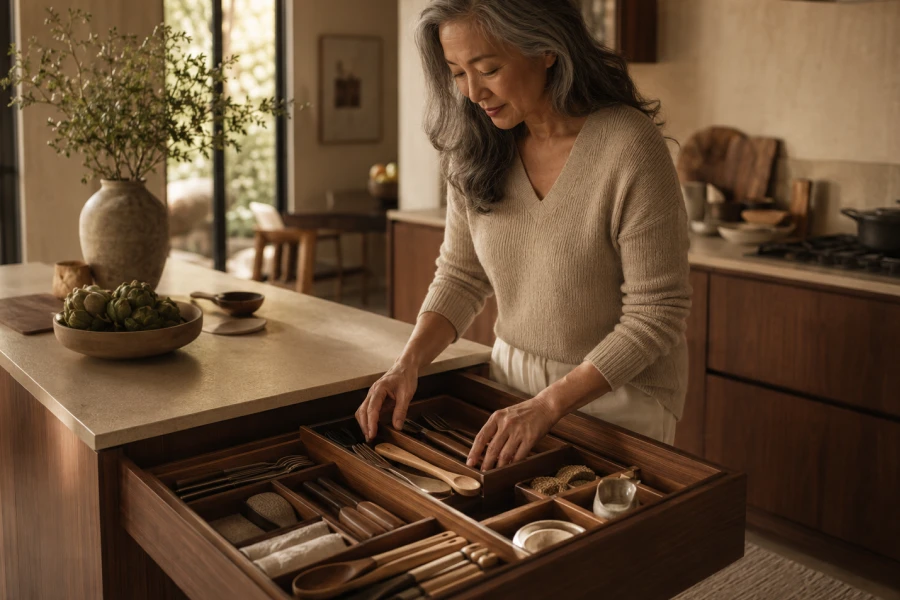
Kitchen drawer organization can make a busy room feel instantly more capable. Drawers hold the small tools that keep meals, cleaning, and routines moving. When they become crowded, even simple tasks start with a search. A clear layout creates faster access and reduces the temptation to buy duplicates. Start by emptying one drawer instead of trying to conquer the entire kitchen. Notice which items you touch every day and which ones only create noise. Keep the most useful tools closest to where they work. Store occasional pieces somewhere less convenient but still logical. Kitchen drawer organization should make cooking easier, not create another display to maintain. A good drawer quietly supports every meal without demanding attention.
Small tools influence kitchen flow more than most people realize. Kitchen drawer organization reduces the repeated pauses that make cooking feel frustrating. When utensils have clear locations, meals move more smoothly from prep to cleanup. Start with the drawer that creates the most annoyance. Remove tools that do not belong in the kitchen. Group baking, serving, and everyday pieces before choosing containers. A practical set of utensil drawer organization zones can prevent spoons and gadgets from becoming tangled. Keep frequently used tools nearest the countertop where you prepare food. Give each category enough room to return easily. The room feels calmer when drawer decisions happen once, not repeatedly.
Kitchen drawer organization works best after you remove what no longer earns space. Empty one drawer onto a clean surface. Sort damaged tools, duplicates, mystery gadgets, and items that belong elsewhere. Keep only the versions you reach for regularly. Test unclear tools before deciding whether they deserve storage. Donate useful extras that another household might appreciate. Recycle broken pieces where possible. Do not keep items because they were expensive or once seemed useful. A lighter drawer makes every remaining object easier to see. Editing creates the space that organizers alone cannot provide.
Containers work better when they follow a clear functional layout. Decide what task happens nearest each drawer. Keep prep tools close to the main preparation surface. Store serving pieces near the table or dish area. Place cooking utensils beside the stove if heat allows. A thoughtful kitchen storage zones plan makes movement more intuitive. Avoid forcing every item into one popular drawer. Consider the weight and length of each category before selecting dividers. Leave some breathing room for items you use daily. Good zones should match how your hands naturally move through the room.
Kitchen drawer organization becomes easier when dividers contain categories without overcomplicating them. Use adjustable trays for utensils that come in different sizes. Keep knives, peelers, and sharp tools safely separated. Shallow inserts can prevent small measuring tools from sliding around. Reserve one narrow section for clips, ties, or simple odds and ends. A few flexible drawer divider ideas are better than a crowded collection of tiny compartments. Choose pieces that you can remove for cleaning. Avoid containers that waste space around their edges. The divider should support the drawer, not become another problem. Measure first so the solution fits without frustration.
Kitchen drawer organization can reduce countertop clutter by giving small tools a dependable destination. Keep everyday scissors, wraps, and towels close to where they are used. Store appliance attachments together instead of scattering them around cabinets. Give food clips and batteries a designated home. Return tools after use before starting the next step. This prevents the slow buildup that makes kitchens feel chaotic. A well-planned drawer can also protect fragile items from dust and damage. Use non-slip liners if objects shift every time you open it. Your counters become easier to wipe and easier to enjoy. The best drawer system supports a cleaner-looking room without extra effort.
Maintenance should be quick enough to happen during normal kitchen life. Return each item after cooking rather than saving everything for later. Once a week, remove crumbs and check for misplaced tools. Reassess a drawer when you repeatedly reach for an item elsewhere. Move it closer instead of fighting the habit. Do a deeper edit after holidays or large gatherings. Avoid adding new gadgets without deciding where they will live. A drawer stays useful when its contents remain intentional. Small resets protect the original clarity. That steady rhythm helps the kitchen stay ready for whatever comes next.



Leave a comment