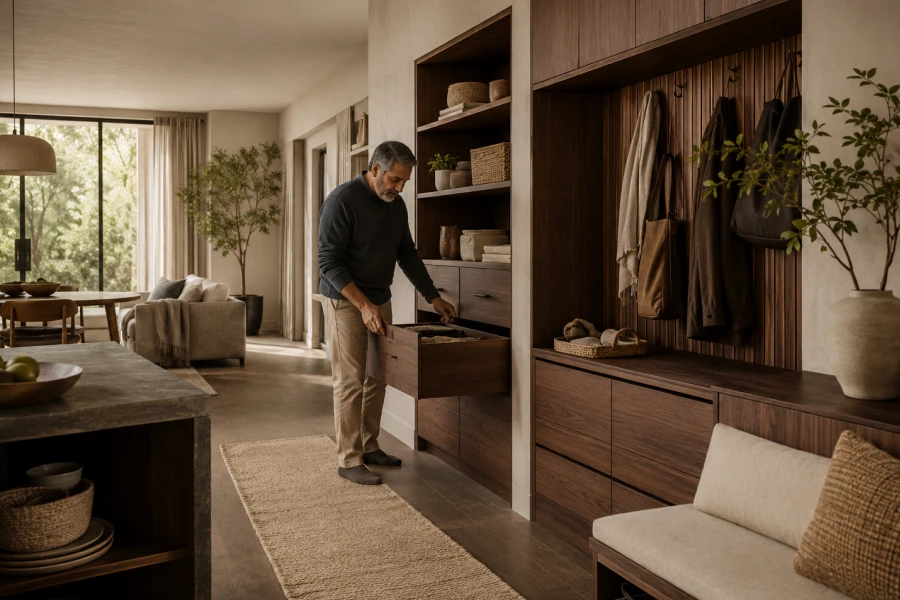
Home storage layout for drawers can improve rooms that feel crowded without adding more furniture. Drawers offer valuable square footage when their contents are planned with purpose. Yet many become random hiding places because their structure remains invisible. A thoughtful layout gives every drawer a role within the larger room. It considers what belongs there, how often you use it, and what needs easy access. Begin by looking at your home room by room. Notice which drawers create delays, overflow, or repeated searches. Then design each one around the activity that happens beside it. Home storage layout for drawers turns enclosed spaces into active helpers rather than forgotten clutter zones. The payoff is a home that works more smoothly without looking over-organized.
A drawer should support the purpose of the room where it lives. Home storage layout for drawers begins with that simple question. In kitchens, drawers may support cooking, serving, or food storage. In bedrooms, they may hold clothing, accessories, or bedside necessities. In living rooms, they may manage remotes, games, and reading tools. Let the nearby activity determine what belongs inside. This prevents a convenient drawer from becoming a home for every random object. A room-based approach also makes items easier to return. Function becomes the first filter before you consider baskets, trays, or labels. The system feels intuitive because it matches the room around it.
Frequency should shape where items sit within every drawer. Home storage layout for drawers places daily essentials where hands can reach them fastest. Weekly supplies can sit farther back or in lower drawers. Seasonal and occasional categories should move to less accessible storage. This hierarchy reduces searching during routine tasks. It also prevents high-value space from being occupied by rarely used products. Keep the most important items visible once the drawer opens. A practical home organization habits system makes access feel obvious. Review frequency after a few weeks because daily life can surprise you. A good layout changes when your routines change.
Planning saves time because it stops you from moving clutter from one place to another. Make a quick note of what each drawer needs to support. Group similar categories by room and task. Measure drawers before ordering any containers. Consider how opening depth affects access to items in the back. Choose solutions that can adapt if the category changes. A simple cabinet organization tools plan can help drawers and cupboards work together. Avoid duplicating storage for the same category in multiple rooms. This creates less maintenance and fewer lost supplies. Thoughtful planning makes every change feel more deliberate.
Home storage layout for drawers works best when it complements other storage choices. Keep beautiful, frequently used items visible if they add usefulness or warmth. Hide visual clutter that interrupts a room’s calm. Drawers are ideal for small objects that need containment. Use shelves for larger categories that benefit from quick visibility. Place backup supplies in hidden zones where they remain easy to review. A balanced room avoids both overexposure and over-concealment. Every item should have a location that supports its practical use. This makes cleanup faster after everyday activities. The result feels orderly without seeming rigid or staged.
Drawers can manage more than utensils and office tools. Home storage layout for drawers may include snacks, linens, cleaning cloths, and household refills. Deep drawers can hold contained pantry categories when they stay easy to view. A dedicated pantry drawer system can make inventory simpler and reduce forgotten purchases. Use bins to separate categories without obscuring what you own. Keep heavy products low for safer access. Place dated items where you can notice them first. Avoid deep stacks that hide useful supplies beneath older ones. Visibility protects both organization and household budgets. This expands the usefulness of drawers throughout the home.
Home systems need review because homes are always changing. A new hobby, job, child, or roommate can change what each room requires. Make small adjustments instead of waiting for total disorder. Move categories when you repeatedly use them somewhere else. Remove items that no longer fit the room’s purpose. Keep some empty space so a drawer can absorb normal change. Revisit your layout during seasonal resets or after a move. Ask whether the drawer saves time or creates another place to search. Effective storage should make daily life lighter. When every drawer has a purpose, every room begins to work harder for you.



Leave a comment