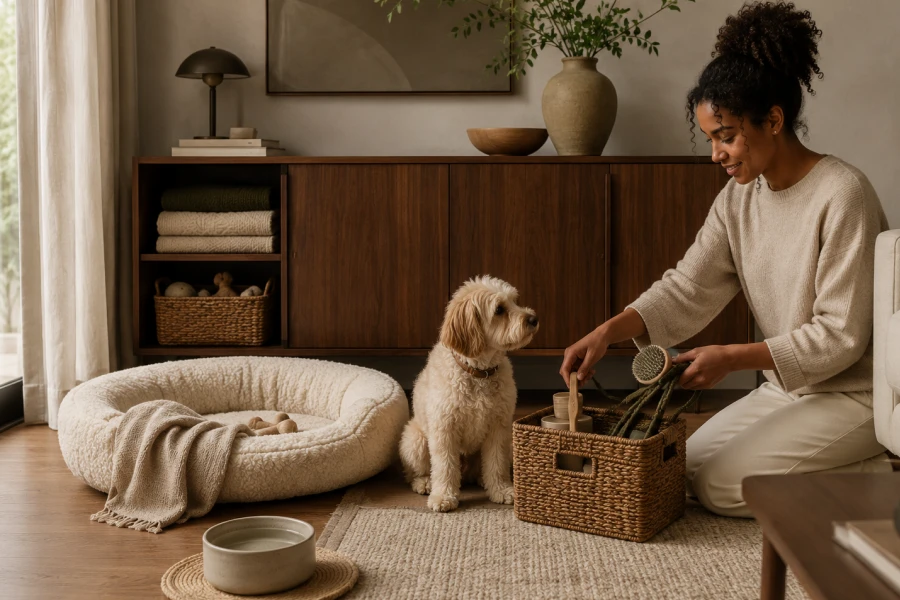
Pet storage ideas for small spaces matter because pets need plenty without owning every surface. Compact homes can still feel spacious when supplies work within existing rooms. The secret lies in using overlooked height, furniture, and transitions. Start by identifying the places where pet clutter lands most often. Entryways, kitchen corners, and sofa areas usually reveal the answer. Then assign each zone one clear purpose instead of stacking unrelated products. A well-placed bin can eliminate a surprising amount of floor mess. Vertical solutions create capacity without expanding a room’s footprint. Hidden storage protects visual calm while keeping necessities available. Pet storage ideas for small spaces become powerful when every choice solves a specific problem.
Walls offer valuable storage when floors already carry furniture and pet beds. Install hooks for harnesses, towels, and lightweight travel bags. A narrow shelf above a feeding area can hold treats and refills. Over-door organizers work well for brushes, wipes, and small accessories. Keep heavier items low enough to access safely. Group similar products so visual scanning remains easy. A tidy cat accessory storage pocket can prevent tiny collars and toys from disappearing. Clear containers help you notice supplies before they run out. Use labels only where several household members share the task. Vertical storage should reduce bending, searching, and floor congestion.
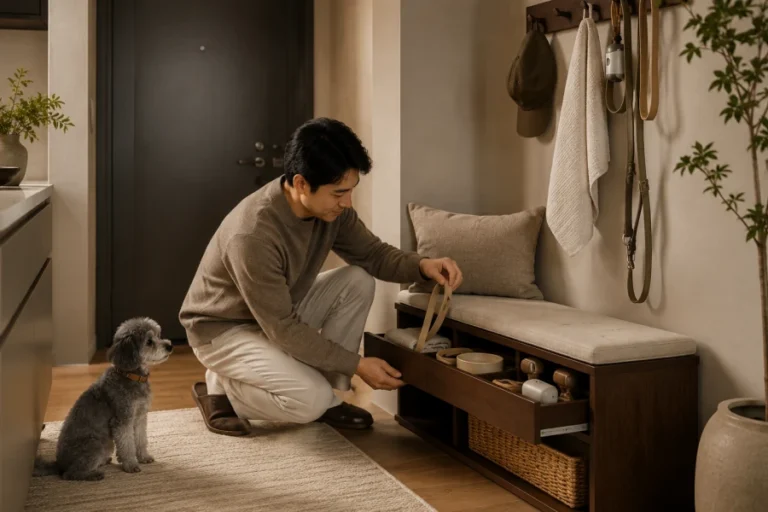
The front door often collects the most visible pet-related clutter. Pet storage ideas for small spaces work best when they respect this high-traffic zone. Add a slim basket for waste bags, rain gear, and portable water bowls. Mount hooks for leashes directly above it. A small bench with storage can hold towels and quick-clean supplies. Keep muddy items separate from clean backup gear. This simple boundary makes walks faster during bad weather. A compact leash organization solution also stops tangles before they start. Choose one return spot for every outdoor item. The doorway feels more welcoming when dog-walking gear stays contained.
Small rooms demand furniture that performs more than one job. Look for benches with internal compartments or side tables with cabinets. A low cabinet can support a lamp while hiding supplies below. Storage ottomans can hold blankets and unused toys near the sofa. Use the inside of cabinet doors for lightweight tools. Avoid buying bulky organizers before measuring the available space. The best pieces disappear into your current layout. A flexible pet closet system can also share space with household linens. Keep categories separated with shallow bins or removable dividers. Every stored item should justify the space it occupies.
Shared furniture can solve storage problems without making a room look pet-focused. Pet storage ideas for small spaces often begin under beds, beside sofas, and inside sideboards. Use low rolling bins for seasonal items beneath a bed. Place a handsome basket beside a chair for blankets and soft toys. A cabinet near the kitchen can hold feeding essentials out of sight. Keep pet products in coordinated containers for a calmer visual result. Choose washable materials where fur and dirt naturally collect. Rotate toys so only a few stay accessible at once. This keeps play interesting while reducing the number of visible objects. Thoughtful furniture use makes small rooms feel more generous.
Pet storage ideas for small spaces should change easily when routines shift. Use portable bins that can move between rooms. Avoid permanent categories that no longer match how your family lives. A treat drawer may need to become a medication drawer later. Seasonal products can move into higher storage during quieter months. Keep one extra container available for temporary overflow. This prevents random piles from becoming permanent fixtures. Review your setup after holidays, trips, or a new pet addition. A flexible plan handles change without starting over. Small-space order survives because it adapts rather than resists.
Storage works only when putting things away feels simpler than leaving them out. Make the return path short after each activity. Keep the container where the item is naturally used. Avoid lids that require extra effort during rushed moments. Choose a weekly reset time that fits your existing schedule. During that reset, remove wrappers, broken toys, and empty packages. Check whether the current zones still serve your pet’s habits. Move a basket before it becomes an annoyance. Small adjustments protect the system better than occasional grand reorganizations. When storage supports daily life, clear floors become the natural outcome.



Leave a comment